
Introduction
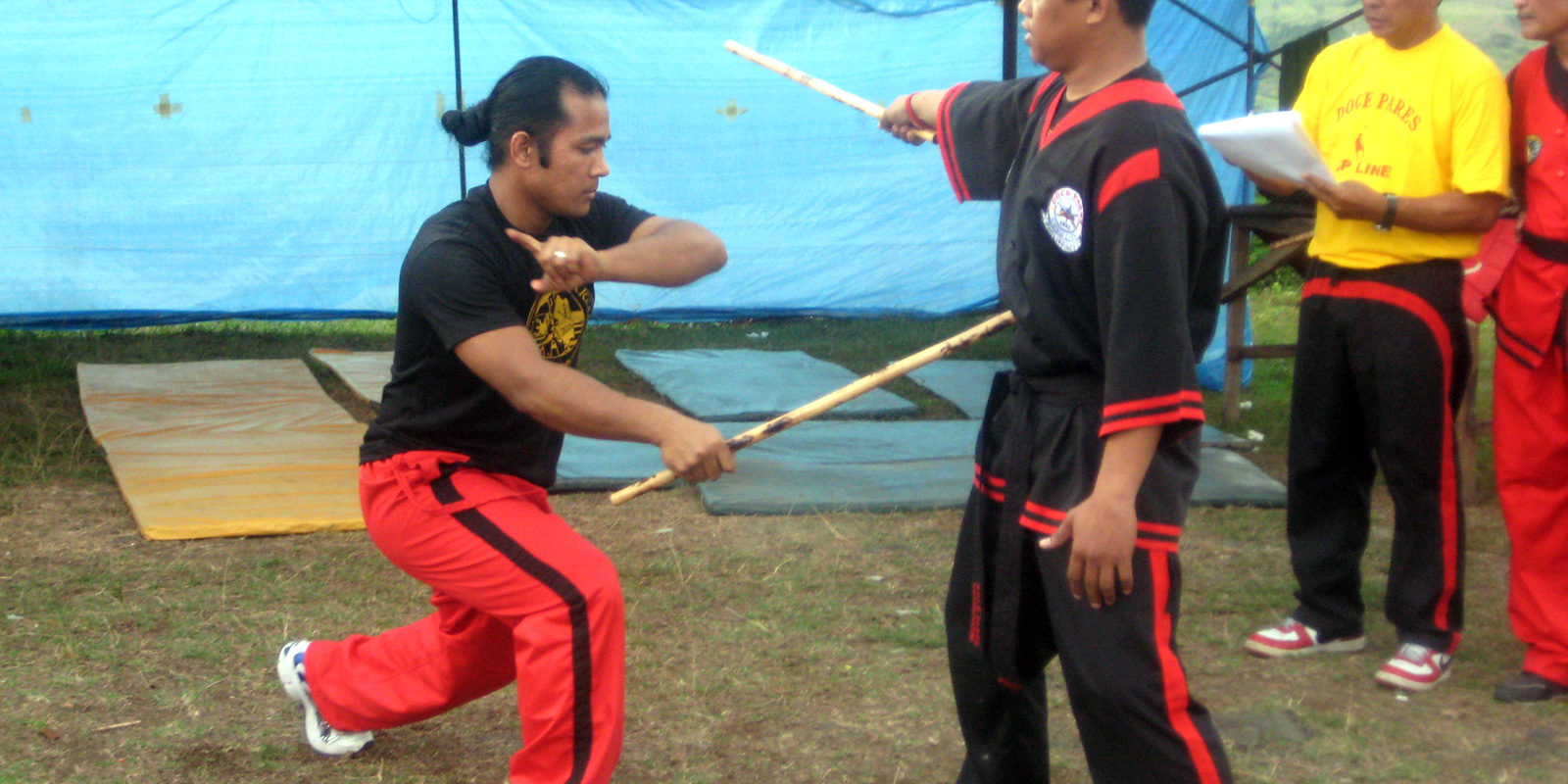
The Doce Pares “Multi-Style” Training Curriculum consists of 10 levels in a 5-year study program. Each level runs for 6 months but is broken down into 2-phase quarterly program conveniently for school to be able to test the student’s progress every 3 months.
To complete the study and training of the 5-year curriculum, the students need to devote and spend at least 4 hours of sessions per week or a total of 200 training hours a year. One specific advantage of the Filipino martial art is the convenience of home study or of after school training. This, we emphasise is a must for all Eskrima practitioners. Complement school training with home workouts.
What is Arnis?
Arnis, Eskrima (or Esgrima) Kali, Pangamot, Panandata, Kalirongan, Didya, Kabaraon, Pagkalikali, Sinawali, Kaliradman, Pagaradman, Estokada, Estoque, Fraile, Armas de Mano or Arnis de Mano.
Whatever it is known in different ethnic regions in the Philippines, the word is only one – it is the only known traditional martial art of the Philippines. Its noble heritage has become the embodiment of the vaunted Filipino courage, endurance, skill and discipline.
To the Cebuanos and most of the Visayan and Mindanao provinces it is popularly called Eskrima while in Manila and most of Luzon, they are presently known as Arnis or “Arnis de Mano”.
The word “Eskrima” was derived from the Spanish word “Esgrima” which means a combat between two individuals with the use of blunt instruments. This word was first introduced in the Philippines, when the Spaniards often watched the Cebuano natives practicing the art with use of either rattan sticks or some pieces or hardwood like “Bahi” and “Kamagong”. The foreigner called the art Esgrima although at the time the natives simply called it as “pangamot” meaning an art of “hand fighting” or a “self-defense art”. Later on, the natives had imitated and erroneously pronounced the word “Eskrima”.
Arnis on the other hand was derived from the word “Arnes” a Spanish term for trapping or armour; Or “harness” a defensive gear of the old European soldiers or those fitted on a horse.
Whereas “Kali” refers to an old broad sword ever common to pre-Spanish time, and originated from India or the Indo-Malay region.